Where to experience Dark Sky Week in the Southwest

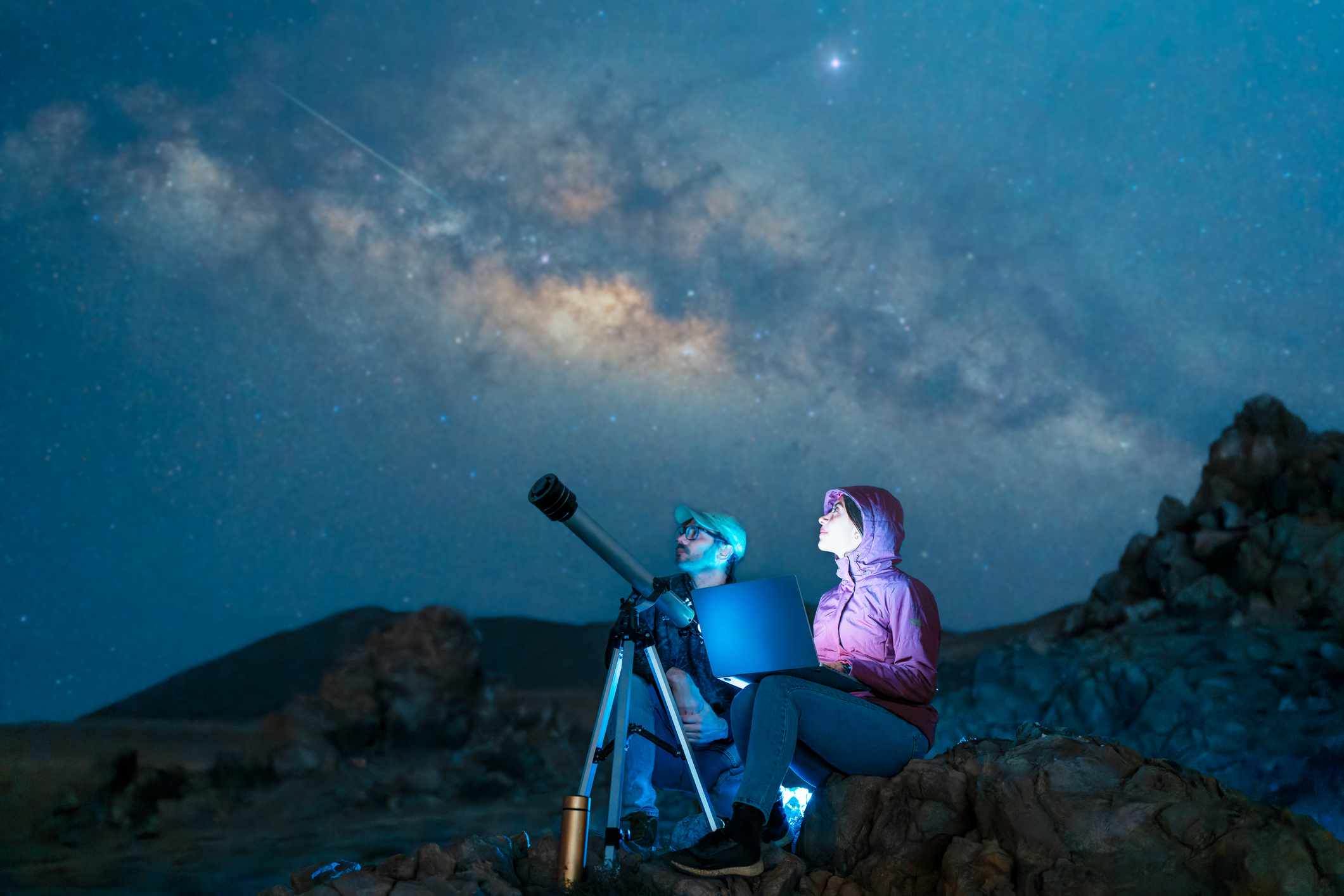
As International Dark Sky Week returns April 13–20, 2026, the Southwest takes center stage for one of nature’s most awe-inspiring shows. With high elevations, dry desert air and vast stretches of protected land, this region offers some of the clearest and wondrous night skies in the country.
Can’t make it to one of these destinations in April? These designated sark sky travel favorites welcome visitors all throughout the year.
Need more? Read more: 20-plus Southwest spring escapes worth booking now
Where to experience Dark Sky Week in the Southwest
From Arizona’s red rock canyons to New Mexico’s vast, untouched wilderness, these destinations offer some of the clearest night skies in the country, along with special Dark Sky Week programming and unforgettable year-round stargazing.
Arizona
Flagstaff
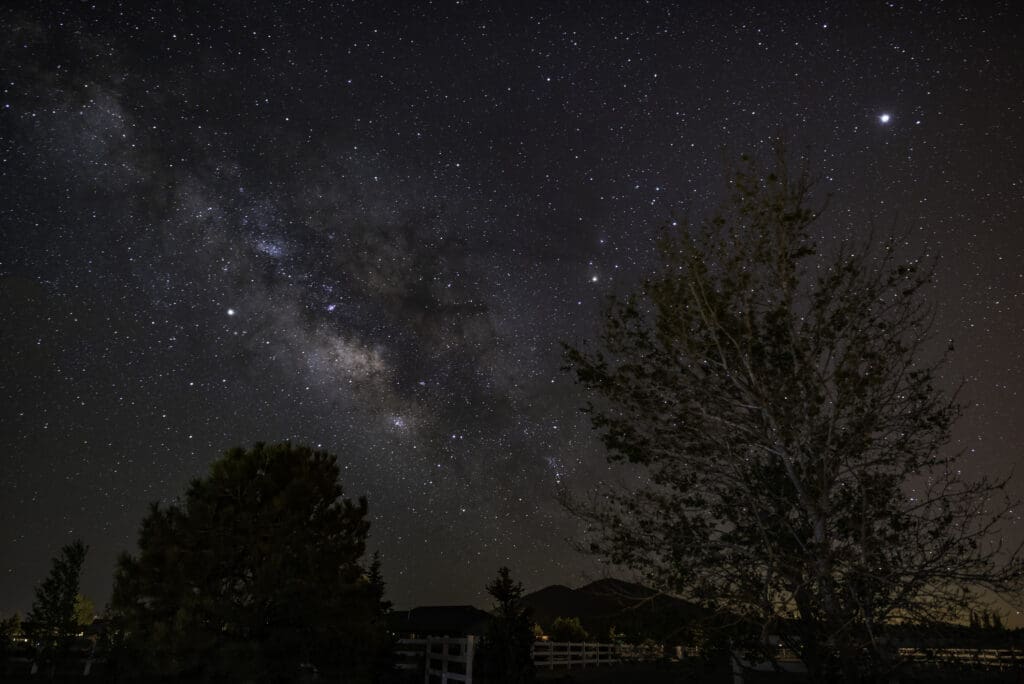
City of Flagstaff
Why it’s worth the night sky detour: Flagstaff was named the world’s first International Dark Sky City and continues to set the global standard for light pollution control and celestial preservation.
Year-round stargazing highlights:
- Exceptional Milky Way visibility on clear nights
- Home to the Lowell Observatory, with evening programs at Lowell Observatory, including telescope viewing and guided constellation tours
- Easy access to dark sky viewing areas just outside town
Good to know: Plan your visit around a New Moon for optimal stargazing conditions.
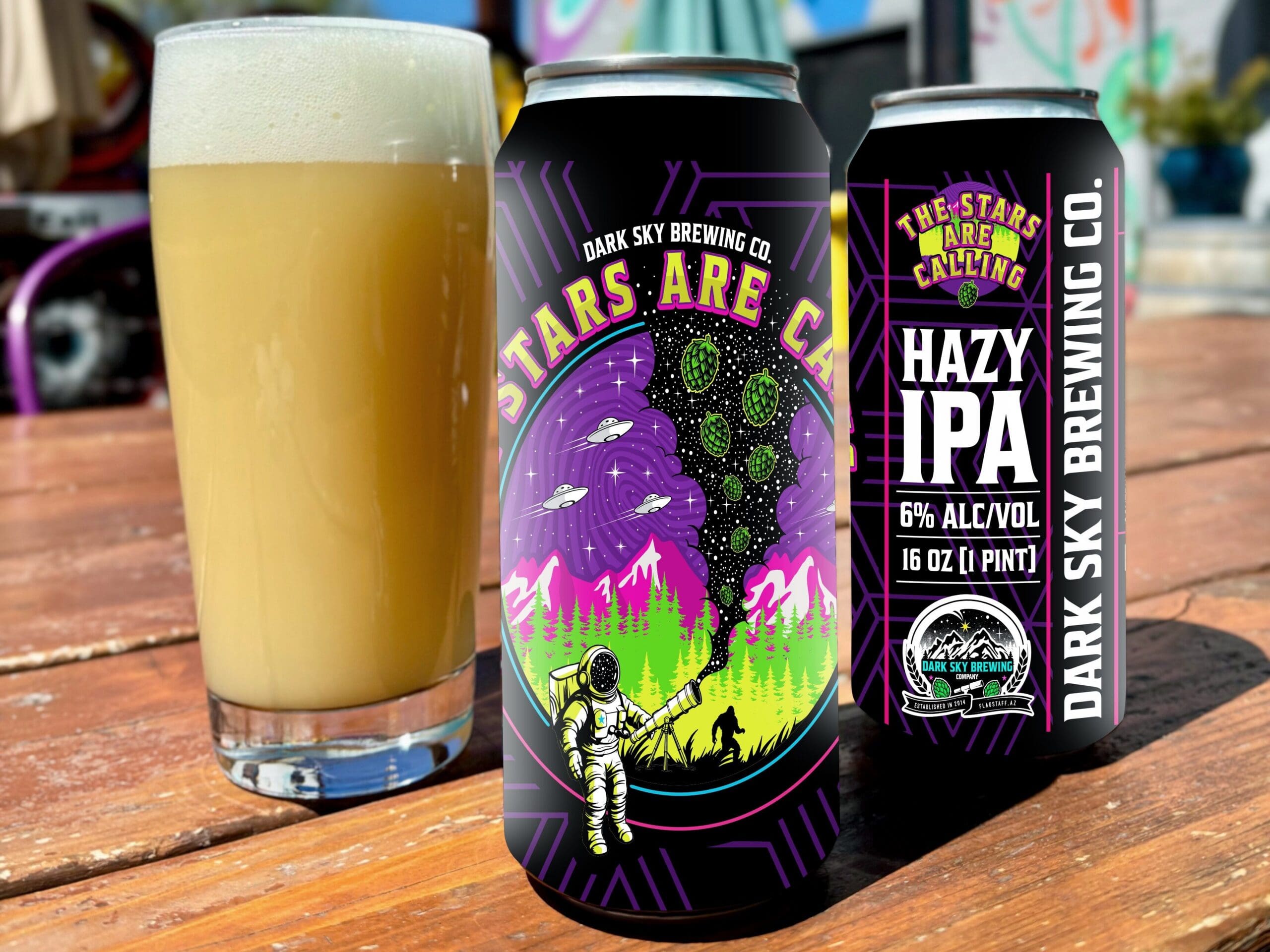
Dark Sky Brewing Co.
Best for: Casual stargazing with a social twist.
Why it’s worth the night sky detour: The brewery, located in Downtown Flagstaff, features one of the community’s best patios for stargazing while sampling 20-plus beers on tap, including the latest addition: “The Stars Are Calling.”
Dark Sky Week highlight: Dark Sky Party (April 10, 7:30–10 p.m.) featuring live music, telescope viewing and a new beer release.
Good to know: Arrive early for patio seating.
Sedona
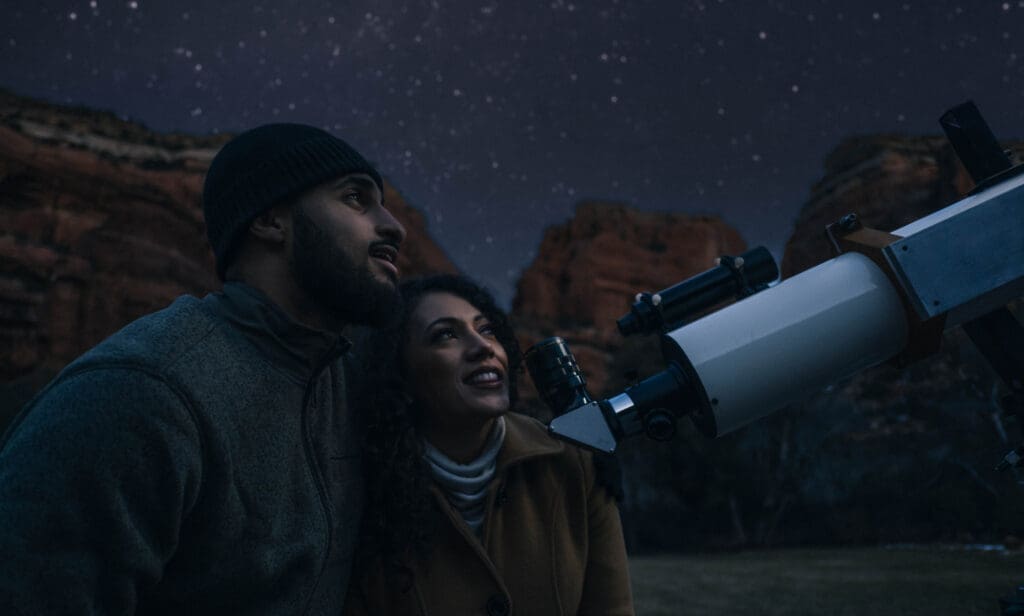
Enchantment Resort
Best for: guided stargazing and wellness under the stars.
Why it’s worth the night sky detour: Set within Sedona’s red rock canyon, this luxury resort offers an immersive way to experience one of the country’s most iconic dark sky destinations.
Dark Sky Week highlights (April 13–19, 2026):
- Navigate the Stars (April 13)
- Stargazing sessions (April 14 and 18)
- Starlight meditation (April 15 and 17)
- Celestial storytelling (April 16)
- Trivia night and creative workshops
Year-round stargazing highlights: Private telescope sessions, expert astronomers and restorative nighttime experiences.
Good to know: Many experiences are exclusive to guests, so booking early is recommended.
New Mexico
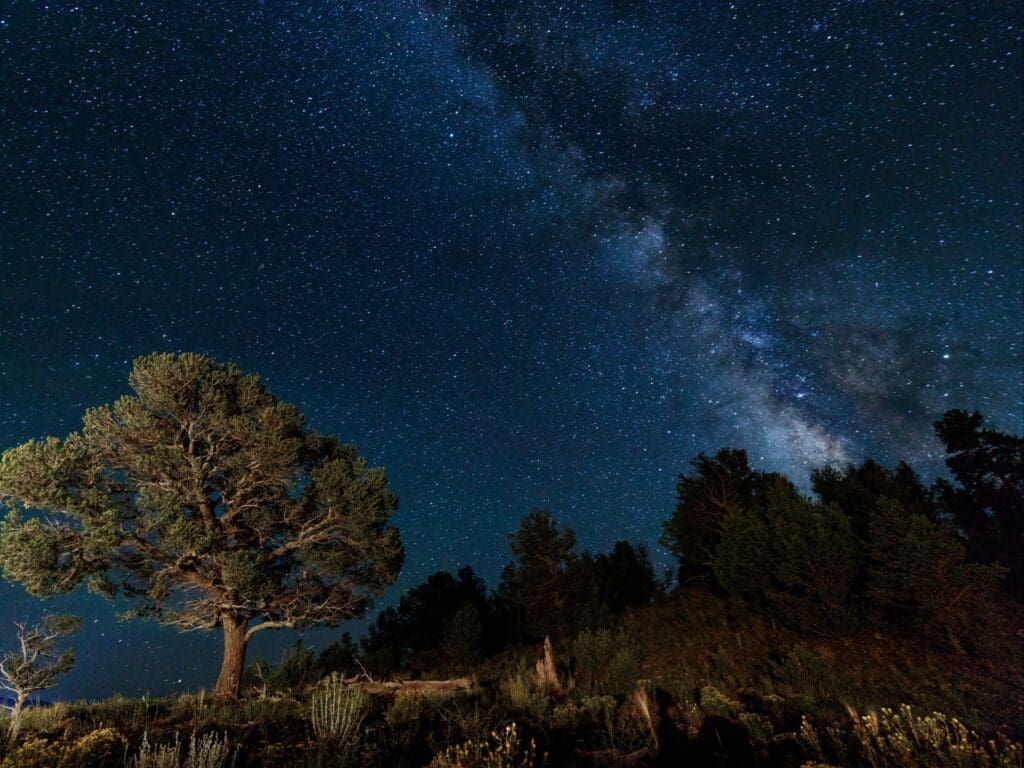
Ted Turner Reserves
Best for: Remote, untouched wilderness.
Why it’s worth the night sky detour: Spanning more than one million acres, these reserves offer an extraordinary level of darkness and silence.
Year-round stargazing highlights:
- Vast, uninterrupted skies
- Wildlife encounters under the stars
- A true “private national park” experience
Good to know: Expect seclusion and limited access.
Santa Fe
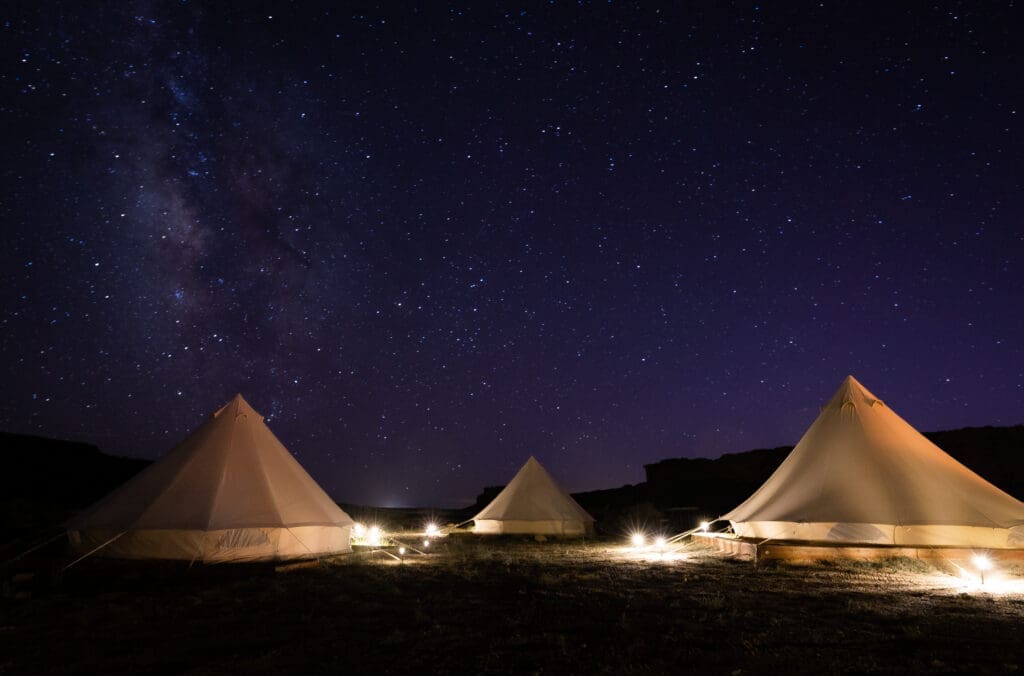
Inn of the Five Graces
Best for: Curated, once-in-a-lifetime stargazing experience.
Why it’s worth the night sky detour: This Relais & Châteaux property pairs luxury with one of the Southwest’s most extraordinary guided astronomy adventures.
Dark Sky Week highlight (April 15–19, 2026):
- Chaco Canyon glamping expedition with telescope viewing and cultural astronomy.
Associated destination: Chaco Culture National Historical Park
Good to know: This is a multi-day experience with limited availability.
Utah
Greater Zion area, Utah
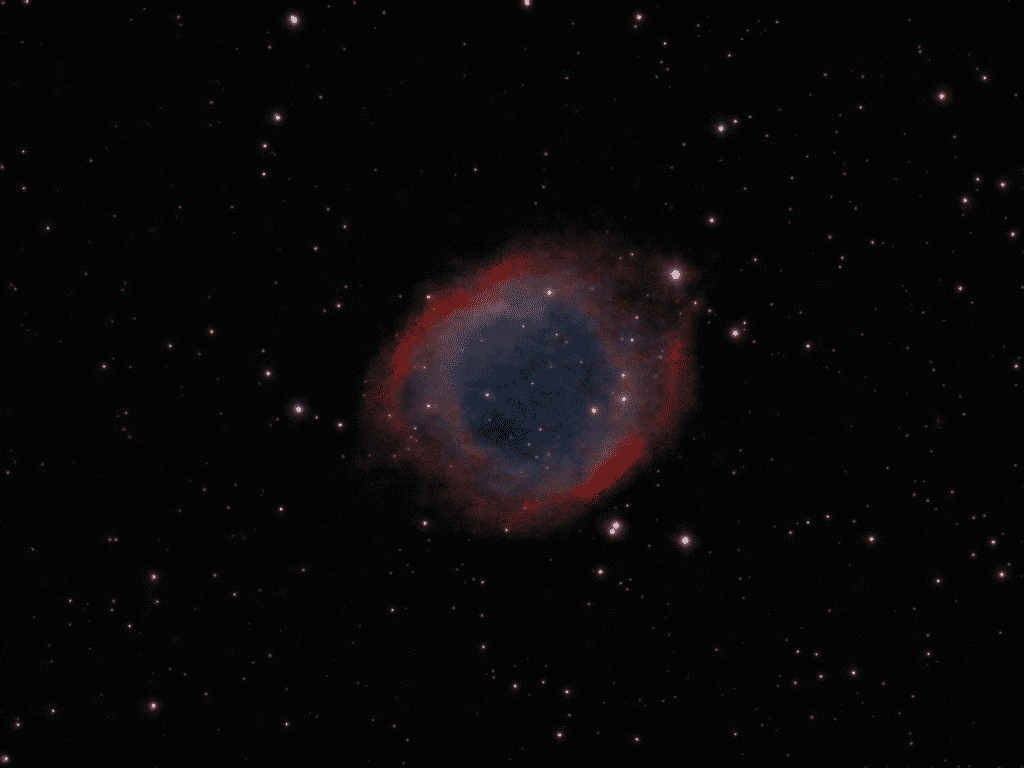
Dark Skies Astronomy Tours
Best for: Guided, beginner-friendly astronomy experiences.
Why it’s worth the night sky detour: Set beneath the clear, star-filled skies near Zion National Park and Hurricane, this immersive tour transforms stargazing into a hands-on, story-driven experience.
Dark Sky Week and beyond: Nightly tours offered year-round.
Experience highlights:
- 90-minute guided experience
- 45-minute seated constellation tour with laser-guided storytelling
- 45-minute telescope session using optical and digital telescopes
- Real-time celestial images displayed on mounted tablets
- Beginner-friendly, no experience required
Good to know: Oversized padded chairs and blankets are provided for comfort.
Grand Circle camps, Utah (and Arizona)
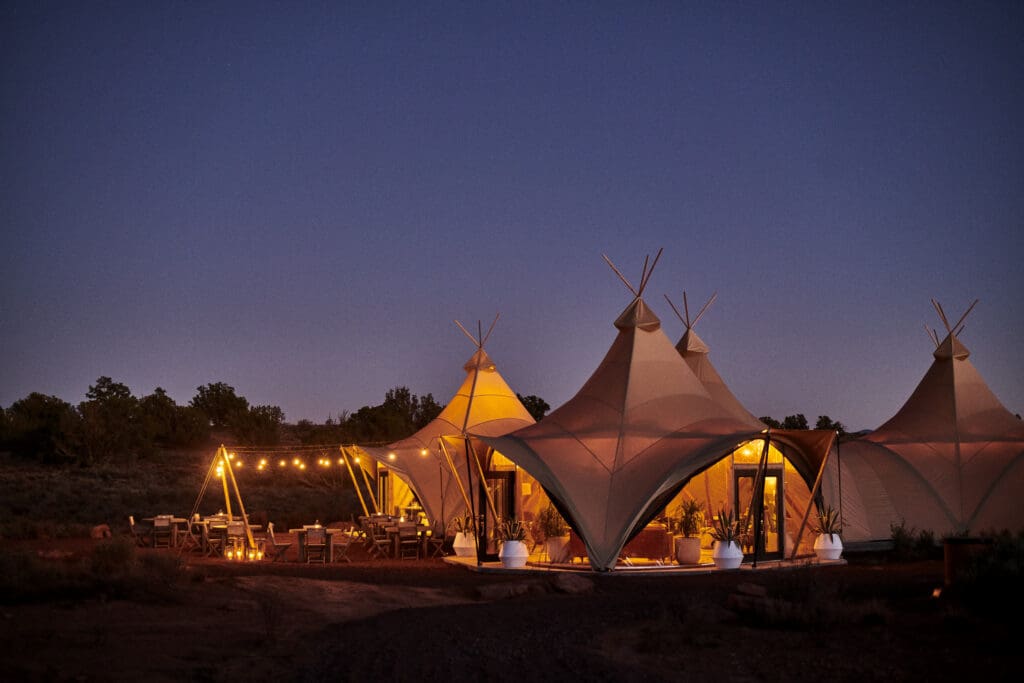
Under Canvas
Best for: Immersive, unplugged stargazing.
Why it’s worth the night sky detour: These are the world’s first Dark Sky-certified resorts, designed to minimize light pollution and maximize your connection to the cosmos.
Dark Sky Week highlights (April 13–20, 2026):
- Guided New Moon stargazing (April 17)
- Star parties, astronomy talks and night hikes
- Galaxy-inspired workshops and meditations
Year-round stargazing highlights: Locations near Moab, Zion National Park, Bryce Canyon National Park and beyond offer wide-open skies and low-light environments.
Good to know: No Wi-Fi, by design.
Carbon County / Helper, Utah
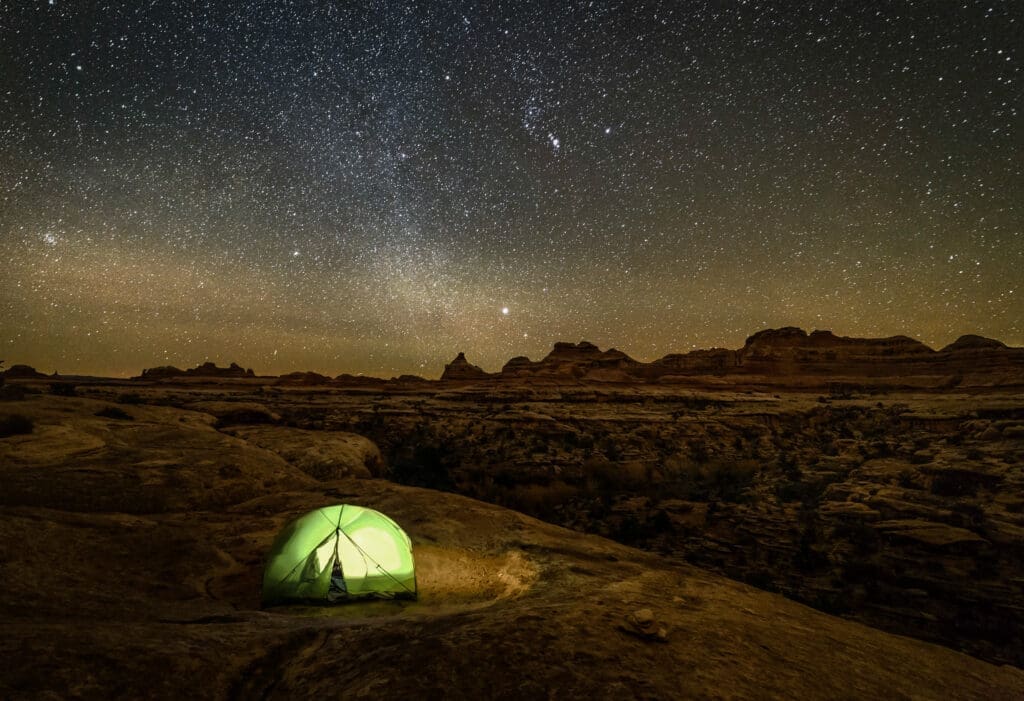
Best for: Accessible Milky Way viewing.
Why it’s worth the night sky detour: Utah is home to one of the highest concentrations of certified Dark Sky Places in the world and Helper offers rare, easy access just minutes from town.
Year-round stargazing highlights:
- Clear views of the Galactic Core from March through November
- Quiet roadside pull-offs for spontaneous stargazing
- Close proximity to Goblin Valley State Park and Nine Mile Canyon
Good to know: Helper’s designation as an International Dark Sky Community reflects strict lighting ordinances that protect visibility year-round.
Canyon Point
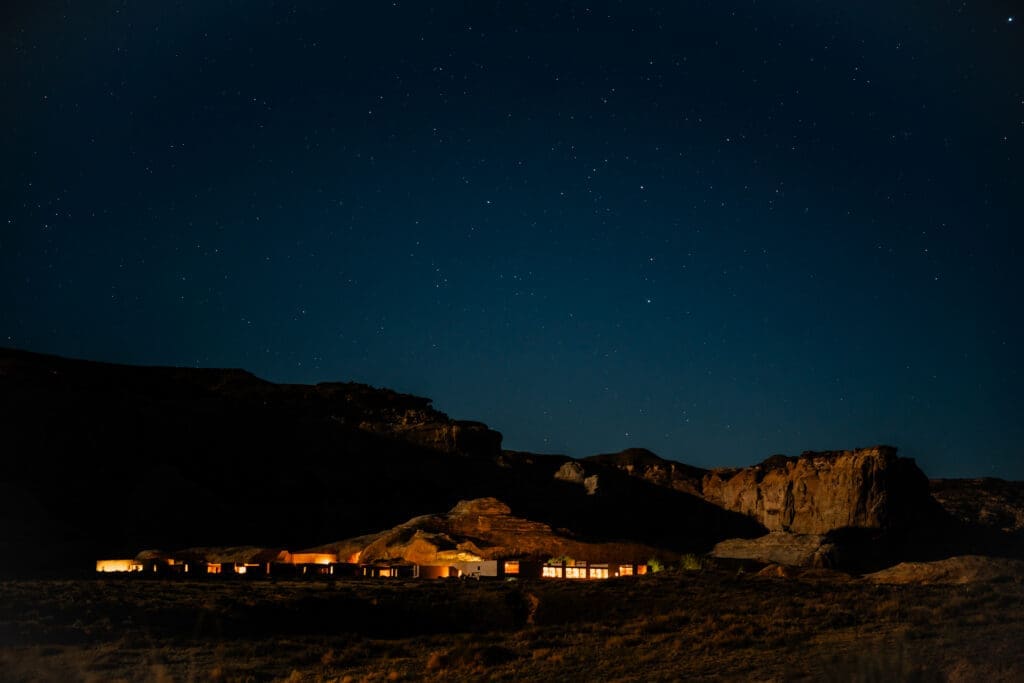
Amangiri
Best for: Ultra-luxury stargazing escape.
Why it’s worth the night sky detour: Few places feel as otherworldly as Amangiri; it’s an off-the-grid, luxury paradise with incomparable dark-sky viewing opportunities.
Year-round stargazing highlights:
- Guided astronomy experiences
- Minimal-light design throughout the property
- Private terrace views of untouched desert skies
Good to know: Book well in advance.